
Wisdom Tooth Removal in Singapore: When It's Needed and What the Process Involves
If your wisdom teeth are healthy and aren't causing any issues, you can leave them in place. Some patients may choose wisdom tooth removal in Singapore because of pain, infection, decay, or damage. The dentist will normally assess the area and take an X-ray if necessary to have an idea of what the position of the tooth is and whether removal might be the right option.
Step 1: Pay Attention to Wisdom Tooth Pain
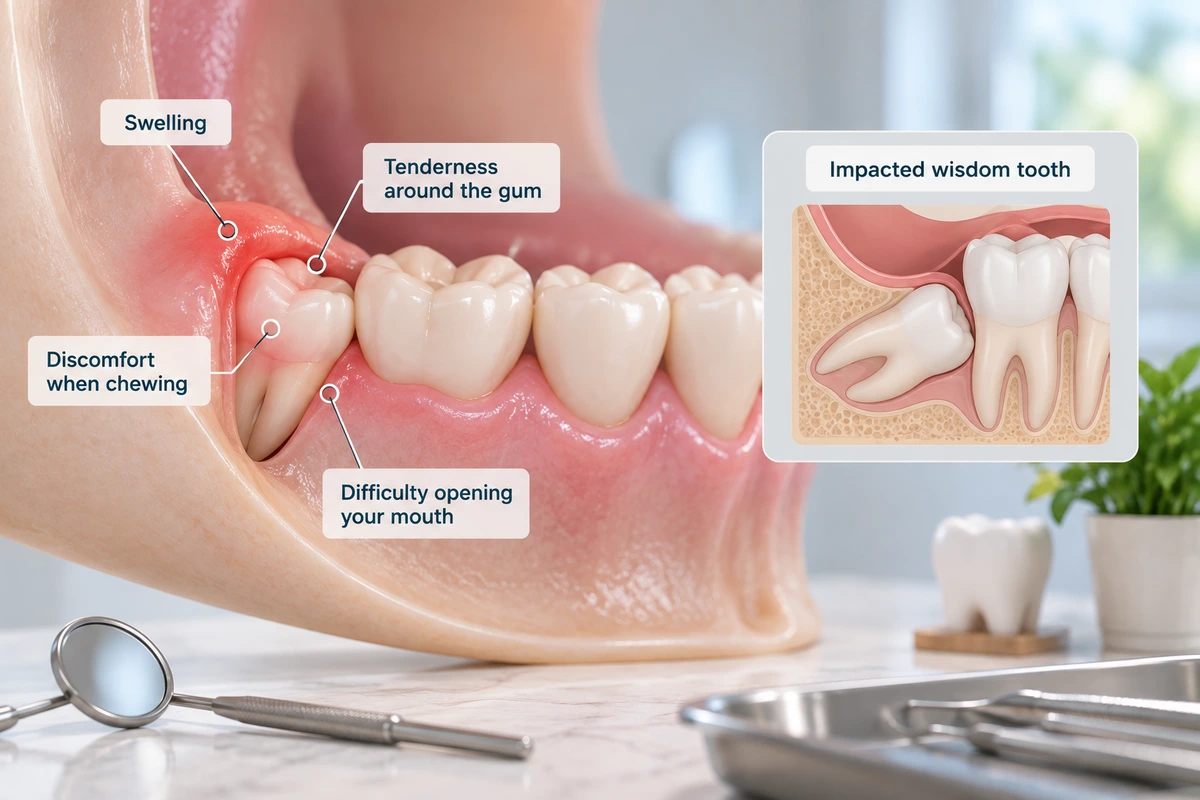
Problems often begin at the back of the mouth. You may notice tenderness around the gum, swelling, discomfort when chewing or difficulty opening your mouth. Wisdom tooth pain can occur when the tooth is partly erupted, inflamed or affected by another dental problem.
Research on symptomatic third molars identifies conditions such as repeated pericoronitis, decay and disease affecting nearby tissues as reasons removal may be considered. An impacted wisdom tooth that is not causing disease, however, is not automatically an indication for surgery.
This is why the first question is not simply, "Do I have a wisdom tooth?" It is, "What is happening around it?"
Step 2: Find Out How the Tooth Is Positioned
An impacted wisdom tooth is unable to erupt into a normal functional position. It may be partly visible, remain beneath the gum or sit at an angle against the tooth in front.
Your dentist will examine the area and may take an X-ray. Clinical guidance recommends considering symptoms, signs of disease, tooth position and relevant imaging when deciding whether a third molar should be removed.
This assessment also helps determine what type of wisdom tooth extraction may be required. If a tooth has come through enough, taking it out is usually pretty simple. But if it’s still hidden under the gum or bone, you’ll probably need surgery to get it out.
Step 3: When Is Removal Actually Considered?
There is no single rule that applies to everyone considering wisdom tooth removal in Singapore. The reason for treatment matters more than simply having a third molar.
| Situation | What the dentist may consider |
|---|---|
| Repeated gum inflammation or infection | Whether the problem is recurring and whether removal is appropriate |
| Decay | Whether the wisdom tooth or neighbouring tooth can be treated predictably |
| Gum or periodontal problems | The health of the tissues around the wisdom tooth and second molar |
| Ongoing symptoms | Whether the symptoms can be linked to the wisdom tooth |
| No associated disease | Whether monitoring is more appropriate than immediate removal |
If you have recurring wisdom tooth pain, the dentist should still identify its source. Pain at the back of the jaw can have more than one dental cause, so symptoms alone should not decide treatment.
Step 4: Understand What the Procedure Involves
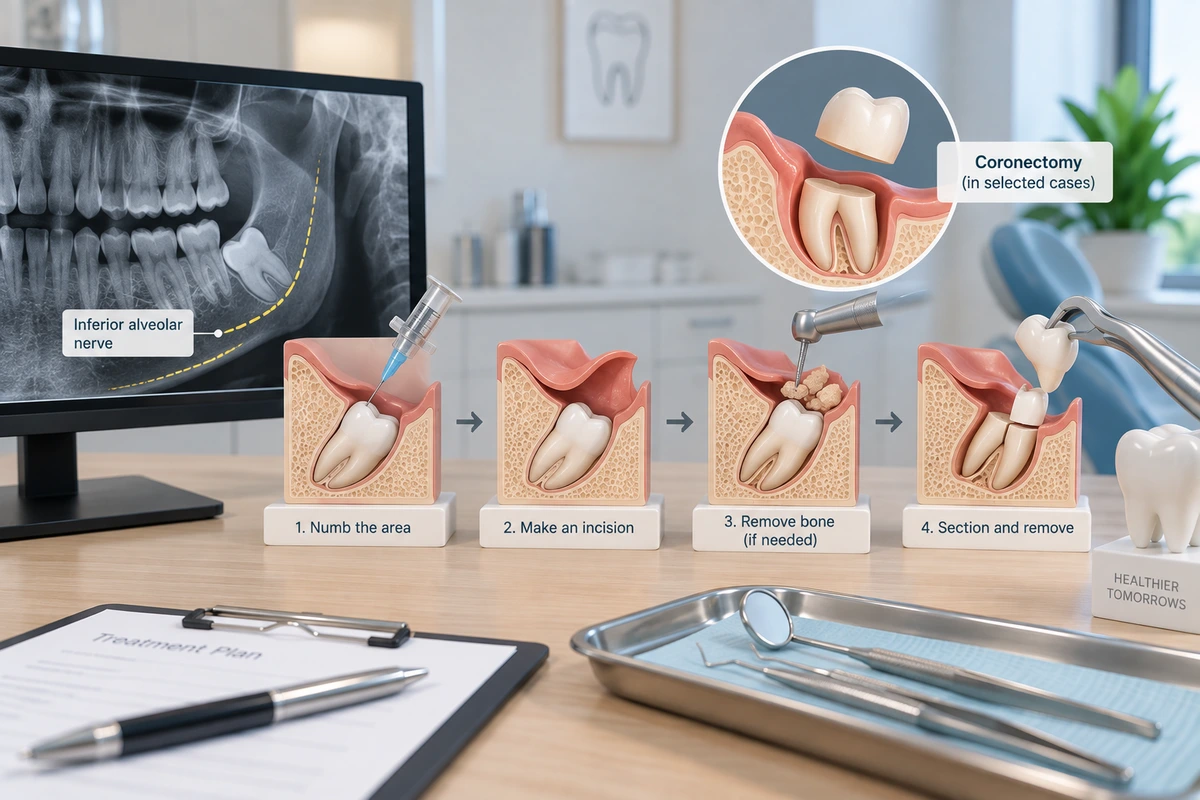
Before treatment, the dentist should explain the planned wisdom tooth extraction, the anaesthetic and what you can expect afterwards.
Local anaesthetic is commonly used to numb the area. For a surgical removal, an incision may be made in the gum, and some surrounding bone may need to be removed. The tooth may also be divided into smaller sections so it can be taken out more easily.
Lower third molars can sometimes sit close to the inferior alveolar nerve. When imaging suggests a high risk to this nerve, coronectomy may be considered in selected cases. In this case, the dentist takes off just the top part of the tooth, known as the crown, and leaves the roots untouched. A systematic review found that coronectomy can be considered when complete removal may put the nearby nerve at greater risk.³
It really comes down to where the tooth sits. The dentist checks the X-ray and everything around the tooth before deciding what to do next.
Step 5: What Happens During Recovery?
Swelling, soreness and temporary difficulty opening the mouth can occur after third-molar surgery. Evidence reviews of postoperative care discuss pain and inflammatory complications as common concerns following these procedures.
Your dentist will give you instructions based on the procedure performed. During the early recovery period, you may be advised to:
- Take recommended pain relief as directed
- Avoid disturbing the extraction site
- Follow instructions about eating and drinking
- Keep the mouth clean as advised
- Avoid smoking while the area is healing
- Contact the dental clinic if symptoms become severe or unusual
Cold therapy is sometimes used after third-molar surgery. A systematic review and meta-analysis found that cryotherapy may provide a small reduction in postoperative pain, although the evidence did not show a benefit for reducing facial swelling or trismus.
Recovery varies. A straightforward removal and a more involved surgical procedure may not feel the same afterwards.
Step 6: Know When to Contact Your Dentist
Some discomfort is expected after removal, but symptoms should be monitored. Contact your dentist if bleeding does not settle as instructed, swelling becomes severe, pain becomes worse rather than better, or you develop fever, difficulty swallowing or difficulty breathing.
The same applies before treatment. Persistent wisdom tooth pain, repeated swelling or recurring inflammation around the back tooth deserves an assessment rather than repeated self-treatment.
If the dentist finds an impacted wisdom tooth, ask what the X-ray shows and why treatment is or is not being recommended. Understanding the reason for treatment makes it easier to make an informed decision.
Making the Decision About Your Wisdom Tooth
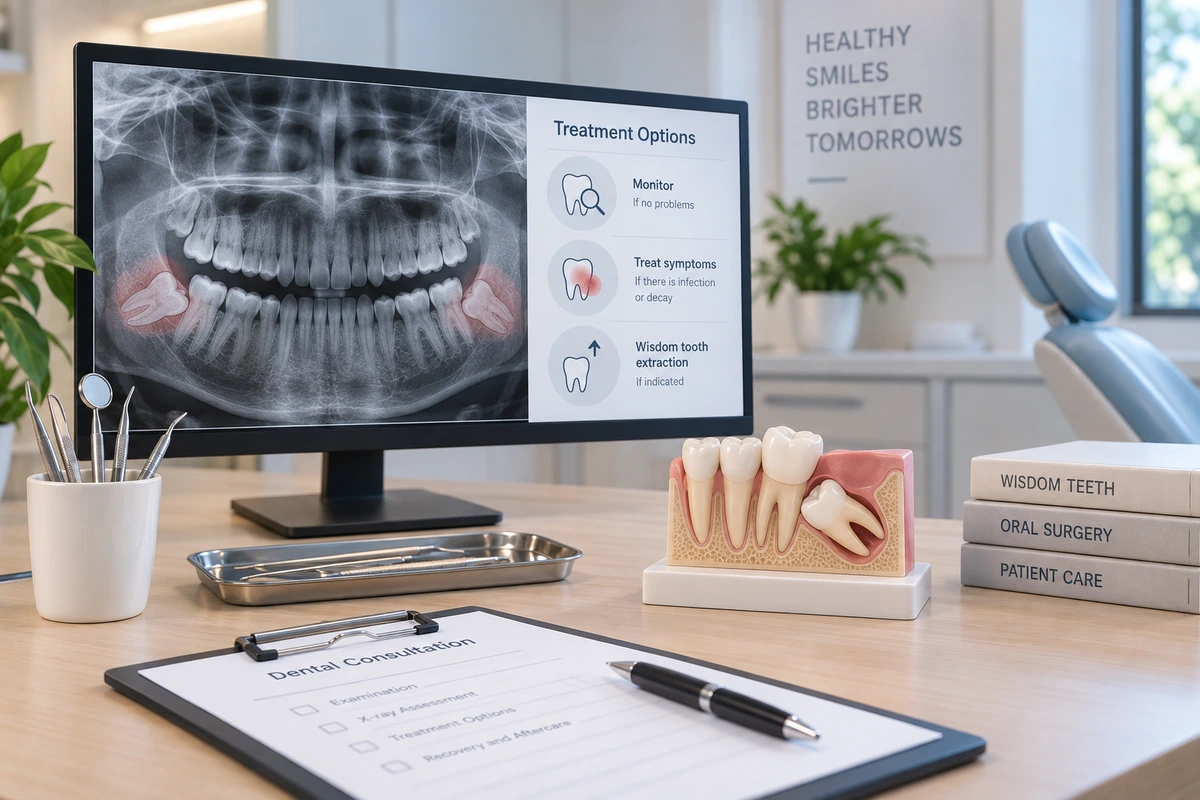
If you are considering wisdom tooth removal in Singapore, the process usually begins with symptoms, an examination and appropriate imaging. From there, the dentist can explain whether monitoring is reasonable or whether wisdom tooth extraction is indicated.
At Ginza Dental, patients can have the tooth assessed and discuss the findings, treatment options and expected recovery. The purpose of the assessment is to understand what is happening around the wisdom tooth before deciding on removal.
