
After a Tooth Extraction: A Step-by-Step Recovery and Aftercare Guide
Tooth extraction aftercare starts the moment you leave the chair. The first 24 hours carry most of the risk because a blood clot must form in the empty socket and protect the bone while healing begins. What you eat, how you clean your mouth and how much you rest all affect whether that clot survives.
Step 1: Immediately After the Extraction
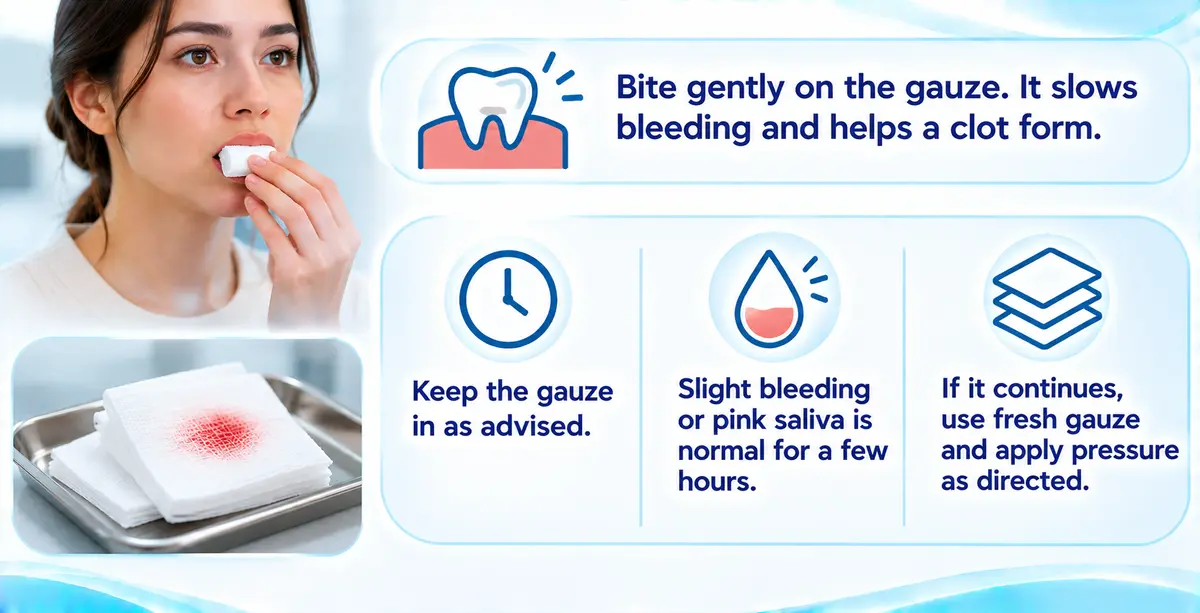
Your dentist will usually pack gauze over the site and have you bite down gently. The pressure slows bleeding and gives the clot time to form.
Stopping the Bleeding
Leave the gauze in for as long as your dentist told you to. Slight bleeding and pink-tinged saliva are normal for the first few hours. If it keeps going, follow the clinic's instructions for swapping in fresh gauze and holding pressure.
Keep your fingers and tongue away from the socket, and resist lifting the gauze every few minutes to check. Each time you disturb the clot, healing starts again from further back. Protecting it is an important part of tooth extraction recovery.
Rest and Avoid Certain Activities
Rest for the remainder of the day. Avoid strenuous exercise, heavy lifting and activities that may increase bleeding.
Do not rinse your mouth, spit forcefully or drink through a straw during the first 24 hours. These actions can dislodge the blood clot. Avoid smoking and vaping as well, since they can interfere with healing and increase the risk of dry socket.
Step 2: Follow Aftercare Instructions During the First 24 Hours
Once you return home, give the extraction recovery time to settle. The local anaesthetic may take a few hours to wear off, so avoid chewing until normal sensation returns. You could accidentally bite your cheek, tongue or lips while the area is numb.
Choose Soft Foods and Suitable Drinks
Eat once the numbness has worn off and your dentist says it is safe. Choose soft foods that require little chewing and are not too hot.
Suitable options include:
- Yoghurt and custard
- Mashed potatoes
- Scrambled eggs
- Lukewarm soup
- Porridge and soft rice
Drink water from a glass rather than using a straw. Avoid nuts, crisps, hard bread, sticky sweets and spicy foods that may irritate the socket. Chew on the opposite side of your mouth.
Manage Pain and Swelling
Some soreness is expected after the anaesthetic wears off. Take pain relief only as advised by your dentist, and follow the recommended dosage.
A cold compress against the outside of your cheek may help reduce swelling. Use it according to your dentist's instructions. If you have had a surgical extraction, ask whether you need any additional precautions.
Step 3: Care for Your Mouth During Days 2 and 3

Swelling, tenderness and jaw stiffness may become more noticeable during the second and third days. These symptoms can occur after an extraction, particularly when a wisdom tooth has been removed. They should gradually improve rather than continue getting worse.
Start Gentle Cleaning and Salt-Water Rinses
After the first 24 hours, your dentist may recommend gentle warm salt-water rinses. Mix a little salt into warm water, move it around your mouth gently and let it fall out without forceful spitting.
Brush your other teeth carefully with a soft toothbrush. Avoid brushing directly over the socket or disturbing any stitches. Keeping the rest of your mouth clean helps prevent food debris from collecting around the extraction site.
Continue Eating Carefully
You can gradually introduce other soft foods as the soreness improves. Avoid chewing directly over the socket. Foods with sharp edges, such as crisps and crusty bread, may irritate the area or become trapped in it.
Continue drinking enough water. If eating remains uncomfortable or you are unsure which foods are suitable, ask your dentist. Following these instructions for after tooth extraction care can help keep the socket clean while the gum heals.
Step 4: Looking After the Socket, Day 4 to 7
Pain and swelling usually start to settle over these four days. Tenderness and bruising can linger, more so after a surgical extraction than a simple one. Keep following your dentist's instructions even once the area stops hurting, since the gum is still closing.
What Is Happening as It Heals
The gum closes over the extraction site within a week or two, while the bone underneath fills in over a longer stretch. The surface may take around one to two weeks to close, although the exact time varies with the type of extraction and your general health.
| Recovery stage | What to expect |
|---|---|
| First 24 hours | Mild bleeding, tenderness and blood clot formation |
| Days 2 to 3 | Swelling, soreness and possible jaw stiffness |
| Days 4 to 7 | Gradual improvement in discomfort |
| After the first week | Gum tissue continues to heal |
Know When to Contact Your Dentist
Contact your dentist if you notice:
- Severe or increasing pain after the first few days
- Bleeding that does not stop after following the pressure instructions
- Swelling that continues to increase
- Fever, pus or an unpleasant taste with worsening discomfort
- Pain that spreads towards your ear or jaw
Difficulty breathing or swallowing, or rapidly spreading facial swelling, requires emergency medical attention.
Step 5: Continue Recovery After the First Week

The socket may look smaller after a week, but the deeper tissues are still healing. Keep brushing gently, and move back towards your usual diet at whatever pace feels comfortable. Go to any follow-up appointment your dentist has arranged.
Dry Socket Prevention and Monitoring Healing
Dry socket happens when the clot is lost or breaks down before the socket has healed. The bone underneath is then exposed, and the pain is significant, usually arriving a few days after the extraction.
For dry socket prevention, stay off cigarettes, skip straws and leave the socket alone. Clean as your dentist instructed. If food works its way into the socket, do not go after it with your fingers or anything sharp; the clinic can deal with it. Following these steps for dry socket prevention can help protect the extraction site while it heals.
Call your dentist if the pain becomes severe, or if it worsens after a day or two of getting better. They can look at the area and decide whether treatment is needed.
If you have questions about after-tooth-extraction care, either call us at Ginza Dental or follow the instructions of your dentist. Every tooth extraction will be different, so advice on what to do afterwards is going to depend upon the procedure and how the socket is healing.
